Every summer the whole of Dapoli smells faintly of mango. It starts in the orchards in March, when the first fruit is still hard and green and nobody is allowed to touch it, and it ends some time in June when the last of the crop has gone to Mumbai and the trees are left to rest. In between there is Amra Mohotsav, the mango festival, and for a few weeks the Alphonso is the only thing anyone here talks about.
Why the Dapoli Alphonso is different
The Alphonso — Hapus, if you are speaking Marathi — grows all along the Konkan coast, but the fruit from the Ratnagiri and Dapoli belt is the one that earns the reputation. The reason is the ground it grows in. This is laterite soil, red and porous, on a plateau that sits about 800 feet above the sea with salt air moving over it every day. The trees are stressed in a way that suits them: not much water, plenty of sun, and cool nights. What comes out of that is a smaller fruit than you will find inland, with thinner skin, no fibre in the flesh, and a sweetness that has some acid behind it rather than sugar alone.
A Dapoli Alphonso is ready when it gives very slightly under the thumb and the shoulders around the stem have turned from green to a deep gold. Ripened in hay, in a covered basket, it comes to the table smelling of itself from across the room.
What happens during the festival
Amra Mohotsav is less an organised event than a season everybody joins in. Around Dapoli it usually means:
- Orchard visits. The growers open their wadis to visitors. You walk under trees that are often older than the people tending them, watch the fruit come down with a zela — a long bamboo pole with a net at the end — and learn quickly that catching it is a skill.
- The first pick. Buying fruit at the orchard, in the wooden crate, packed in hay, at a price that has not passed through four hands on the way to a city market.
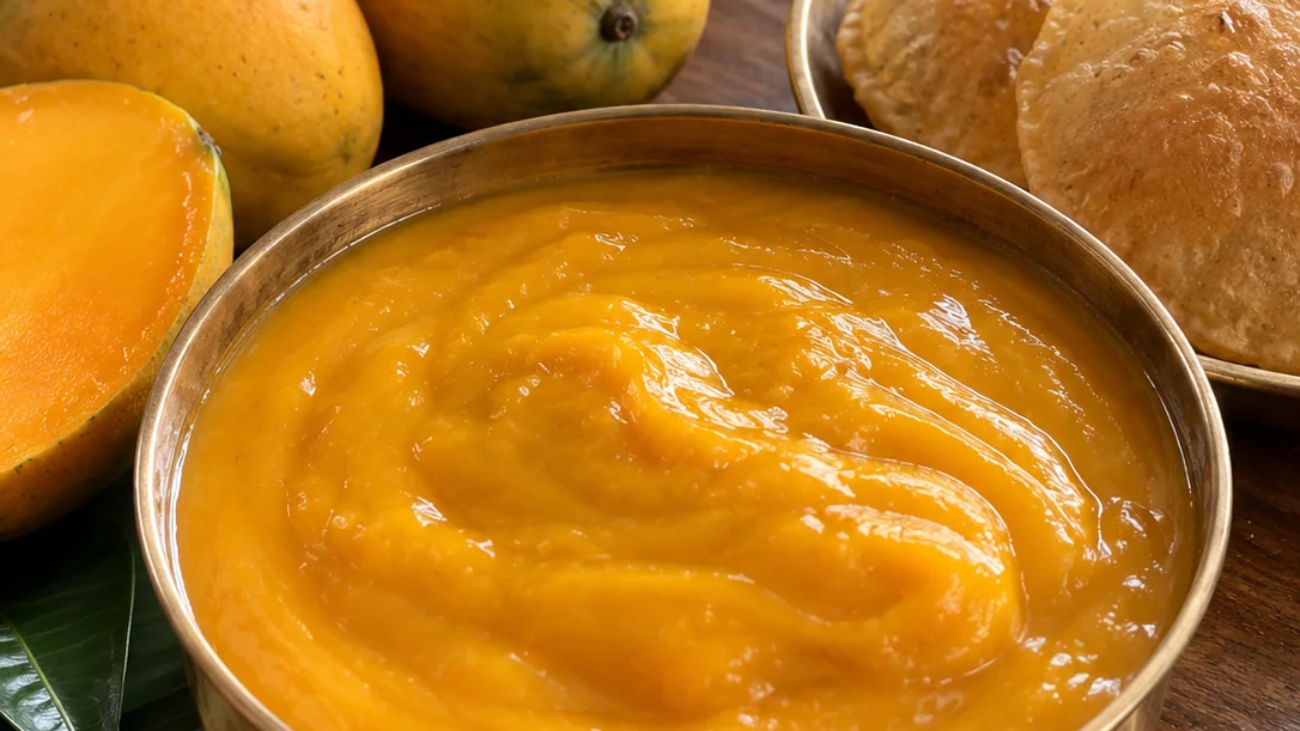
- Aamras thalis. Fresh aamras with hot puri, a little ghee, and the kind of second helping that is offered rather than asked for.
- The by-products. Amba poli — mango leather, dried in sheets in the sun — mango pickle from the green fruit, and jars of pulp put up for the rest of the year.
Where we come into it
The Mango Inn is named for the trees, and there are still mango trees on the property. Through the season we serve aamras at breakfast for as long as the fruit lasts, and we can point you to the growers we buy from — the ones who will let you into the orchard rather than sell you a crate at the gate.
If you want fruit to take home, tell us when you book. It travels better than people expect, provided it goes in hay and nobody stacks anything on top of it.
When to come
The season runs roughly from the middle of April to the first week of June, and it moves a little each year with the weather. Late April into May is the safest bet: the fruit is properly in, the heat has not yet become tiring, and the monsoon is still a month away. Book early — this is the busiest few weeks of our year, and the rooms go before the fruit does.